Clinics, Nursing Homes & Small Hospitals (10–50 Beds)
Healthcare buildings are not just structures. They are systems that support life.
Mistakes in healthcare planning don’t just increase cost — they affect safety, efficiency, and compliance.
This checklist helps doctors and promoters prepare clearly before healthcare design begins.
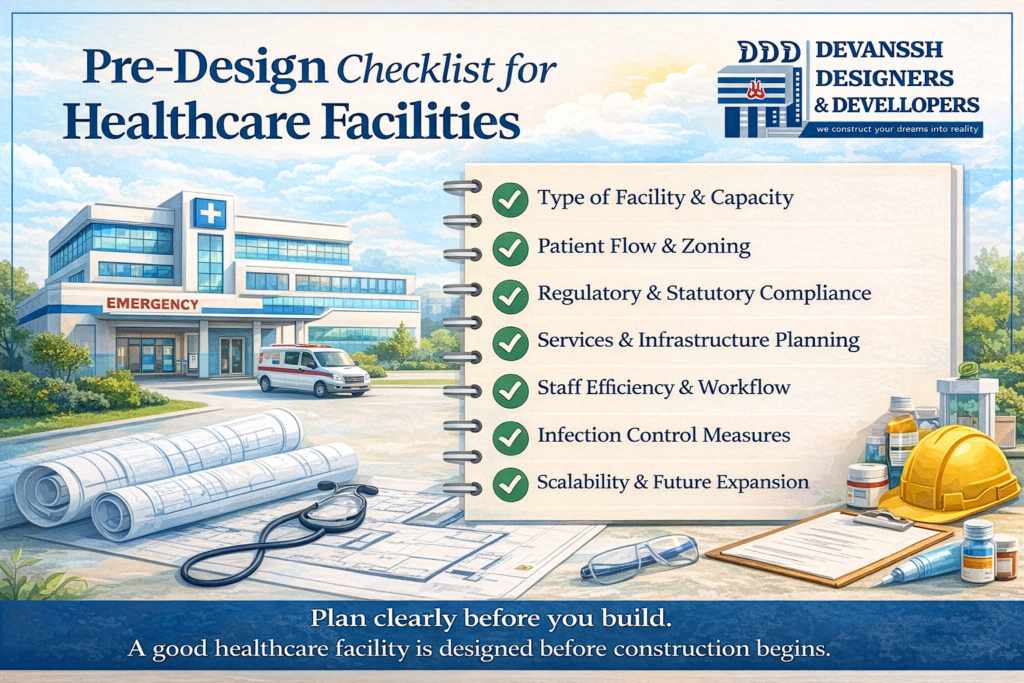
1. Type of Facility & Capacity
Define the scope first.
- Clinic, nursing home, or hospital
- Number of beds (present and future)
- OPD load and specialties
- Diagnostics, OT, ICU requirements
Unclear scope leads to inefficient layouts.
2. Patient Flow & Zoning
Movement planning is critical.
- OPD and IPD separation
- Emergency access
- Clean and dirty circulation
- Visitor control
Good zoning improves safety and infection control.
3. Regulatory & Statutory Compliance
Design must comply before it impresses.
- Fire safety norms
- Biomedical waste management
- Oxygen and medical gas systems
- Accessibility, ramps, and lifts
Early compliance avoids approval delays.
“Healthcare facilities designed in alignment with patient safety principles and accreditation frameworks such as NABH Guidelines for Healthcare Facilities perform better operationally over time.”
4. Services & Infrastructure Planning
Hospitals run on systems.
- Electrical load and backup power
- HVAC and ventilation
- Plumbing and drainage
- Medical gas pipeline systems
Services should be planned before walls.
5. Staff Efficiency & Workflow
Efficient movement improves care.
- Nursing station visibility
- Departmental adjacency
- Reduced walking distances
Good planning reduces staff fatigue.
6. Infection Control Measures
Design supports hygiene.
- Material selection
- Easy-to-clean surfaces
- Isolation capabilities
- Controlled waste movement
Design silently protects patients and staff.
7. Scalability & Future Expansion
Healthcare facilities grow.
- Additional beds or departments
- Vertical or horizontal expansion
- Phased development planning
Expansion should not disrupt operations.
Why Pre-Design Planning Is Critical in Healthcare
Because here, design decisions directly impact:
- Patient safety
- Staff efficiency
- Legal compliance
- Long-term operational cost
At Devansh Designers & Developers, healthcare projects are planned with precision, responsibility, and respect for life.
“This checklist forms the planning foundation of our Healthcare Design & Construction Services, ensuring safe and compliant facilities.”