
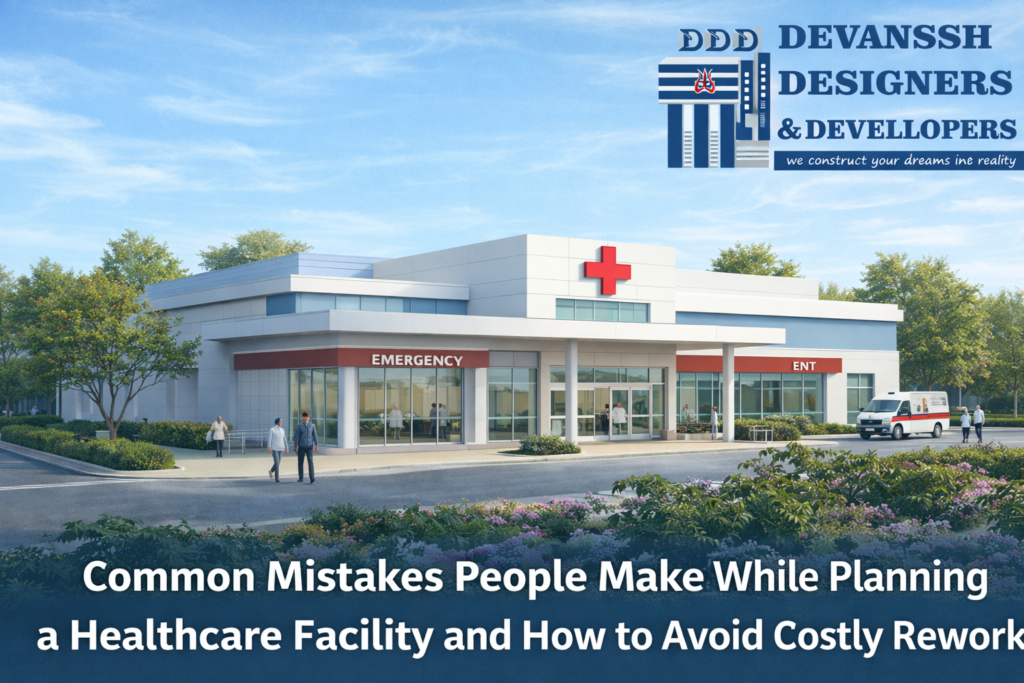
Common Mistakes People Make While Planning a Healthcare Facility and How to Avoid Costly Rework.
Designing a healthcare facility is very different from designing any other building. A clinic or hospital is not just a place for treatment—it is an environment that affects patient recovery, staff efficiency, hygiene control, and long-term operational costs. Yet, many healthcare projects struggle due to one core issue: poor planning at the design stage.
From small clinics to diagnostic centers and hospitals, we’ve observed that most operational problems are rooted in early design decisions. Let’s explore the most common mistakes made while planning healthcare facilities—and how thoughtful design can prevent them.
1. Treating Healthcare Buildings Like Regular Commercial Spaces
One of the biggest mistakes is designing clinics and hospitals like offices or retail spaces. Healthcare environments have unique functional, hygiene, and movement requirements.
How to avoid it:
Healthcare design must prioritize patient flow, staff circulation, infection control, and emergency access. Zoning of clean, semi-clean, and dirty areas is essential for safe operations.
2. Poor Patient and Staff Circulation Planning
Confusing layouts increase patient stress and slow down staff efficiency. Overlapping movement paths between patients, staff, and services can create chaos during peak hours.
How to avoid it:
Plan clear, logical circulation routes. Separate patient movement from staff and service zones wherever possible. Good circulation improves experience, safety, and productivity.
3. Ignoring Infection Control at the Design Stage
Infection control is often treated as an operational issue rather than a design responsibility. This leads to surfaces, layouts, and ventilation systems that are hard to maintain.
How to avoid it:
Select easy-to-clean materials, design proper waste disposal routes, and plan ventilation systems that reduce cross-contamination. Good design actively supports hygiene protocols.
4. Inadequate Planning of Medical Services and Utilities
Late decisions about medical gas lines, electrical loads, HVAC systems, and plumbing often cause major rework during execution.
How to avoid it:
Coordinate architectural, structural, MEP, and medical equipment planning from the beginning. Early integration ensures safety compliance and reduces future downtime.
5. Overlooking Patient Comfort and Psychology
Clinical efficiency is important, but patient experience matters just as much. Harsh lighting, noise, and cold interiors can increase anxiety and discomfort.
How to avoid it:
Use natural light, calming color palettes, acoustic control, and comfortable waiting areas. Thoughtful design can significantly improve patient trust and satisfaction.
6. Unrealistic Budgeting and Phased Planning
Many healthcare projects underestimate costs related to specialized services, compliance requirements, and future upgrades.
How to avoid it:
Plan budgets realistically with a phased development approach. Prioritize critical medical infrastructure while allowing flexibility for future expansion.
7. Copy-Pasting Hospital Designs Without Site and Scale Consideration
What works for a multi-specialty hospital may not suit a neighborhood clinic. Blindly copying layouts leads to inefficiency and regulatory issues.
How to avoid it:
Design should respond to patient load, services offered, site constraints, and local regulations. Custom solutions always outperform borrowed ones.
8. Starting Construction Without Complete Regulatory Compliance Planning
Healthcare buildings must comply with multiple local and national regulations. Ignoring this early can cause approval delays or costly modifications.
How to avoid it:
Integrate regulatory requirements into the design stage. Early compliance saves time, money, and legal complications.
9. No Provision for Future Growth and Technology
Healthcare evolves rapidly. Facilities designed only for present needs quickly become outdated.
How to avoid it:
Design flexible spaces and infrastructure that can adapt to new technologies, equipment, and service expansions.
Final Thoughts
A well-designed healthcare facility supports healing, efficiency, and long-term sustainability. Most problems faced during operations can be traced back to rushed or incomplete planning decisions.
Good healthcare design is not an added luxury—it is a functional necessity. Investing time and expertise in early planning leads to safer facilities, smoother operations, and better outcomes for both patients and staff.
About the Author
Devansh Designers & Developers is a design and construction firm specializing in residential and healthcare facility projects. With hands-on experience from concept to execution, we focus on functional planning, regulatory compliance, and long-term operational efficiency.
“We design Healthcare facilities in alignment with patient safety principles and accreditation frameworks such as NABH Guidelines for Healthcare Facilities perform better operationally over time.”