
Mistakes People Make While Planning Their Home and How to Avoid Costly Rework.
Building a home is one of the most emotional and expensive decisions a family makes. It’s not just a structure of bricks and concrete—it’s where daily life unfolds for decades. Yet, many homeowners rush into construction with incomplete planning, borrowed ideas, or Instagram inspiration that doesn’t translate well to real life. The result is stress, budget overruns, delays, and painful rework.
Having designed and executed residential and healthcare projects, we’ve seen a clear pattern: most construction problems are not site problems—they are planning problems. Let’s break down the most common mistakes people make while planning their home and how you can avoid them.
1. Starting Construction Without a Clear Design Brief
Many homeowners begin with a rough idea like “a modern 3BHK” or “something luxurious,” assuming details can be figured out later. This usually backfires.
A missing or vague design brief leads to constant changes during execution, which means higher costs, material wastage, and project delays.
How to avoid it:
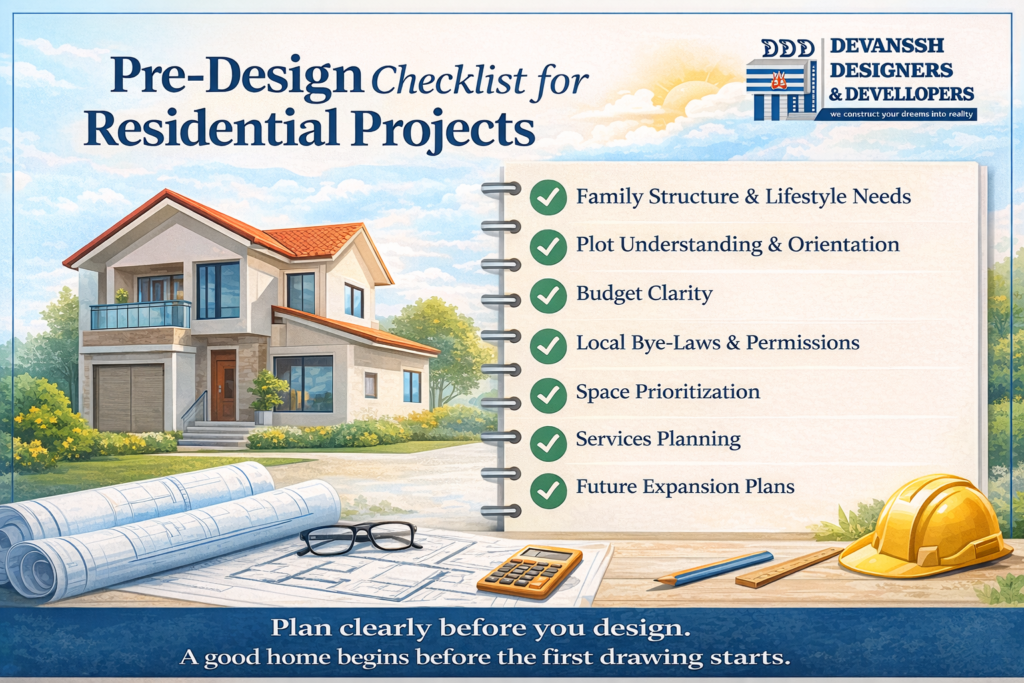
Before a single brick is laid, clearly define your requirements—number of rooms, lifestyle needs, storage expectations, future expansion, budget range, and maintenance preferences. A detailed brief gives your designer a clear direction and protects you from impulsive decisions later.
2. Designing for Looks Instead of Daily Life
Pinterest-worthy homes look great in photos but often fail in real-world use. Glossy white floors, oversized furniture, and open kitchens may impress visitors but can be impractical for everyday living.
How to avoid it:
Design should support how you live, not how your house looks online. Think about cleaning effort, movement patterns, privacy, noise control, and natural wear and tear. A good design balances aesthetics with functionality.
3. Ignoring Natural Light and Ventilation
Artificial lighting and air-conditioning cannot replace natural light and fresh air. Poorly planned homes feel darker, hotter, and more expensive to maintain.
How to avoid it:
Plan openings based on site orientation, prevailing wind direction, and local climate. Cross ventilation, shaded windows, and thoughtful room placement can significantly improve comfort and reduce electricity bills.
4. Underestimating Storage Requirements
Storage is often an afterthought, added only after construction begins. This results in cluttered spaces or expensive custom furniture later.
How to avoid it:
Plan storage early—wardrobes, kitchen units, utility areas, lofts, and concealed storage. Smart storage planning makes even compact homes feel spacious and organized.
5. Not Planning Services Early (Electrical, Plumbing, HVAC)
One of the biggest causes of rework is late planning of services. Electrical points, plumbing lines, drainage slopes, and air-conditioning provisions are often decided on-site, leading to hacking and patchwork.
How to avoid it:
Coordinate architectural, structural, and services drawings before execution. Early planning ensures cleaner finishes, better performance, and lower long-term maintenance.
6. Unrealistic Budget Expectations
Many homeowners fix a construction budget without accounting for design quality, material standards, site conditions, or future upgrades. When reality hits, compromises follow.
How to avoid it:
Set a realistic budget with a contingency buffer. Understand where to invest (structure, waterproofing, services) and where savings are sensible. Good design often reduces overall cost by preventing mistakes.
7. Copy-Pasting Designs Without Site Context
What works on one plot may fail miserably on another. Soil conditions, setbacks, climate, surroundings, and local regulations matter more than trending layouts.
How to avoid it:
Design must respond to your specific site. A site-sensitive approach improves structural safety, comfort, and long-term durability.
8. Choosing a Contractor Before Finalizing Design
Starting construction with incomplete drawings often results in guesswork on-site. This increases dependency on verbal instructions and leads to disputes.
How to avoid it:
Finalize detailed drawings and specifications first. A clear design allows accurate costing, smoother execution, and accountability at every stage.
9. No Long-Term Thinking
Homes are often designed for present needs only, ignoring future changes like growing families, aging parents, or work-from-home requirements.
How to avoid it:
Plan flexible spaces and structural provisions for future expansion. Thoughtful planning today saves major renovation costs tomorrow.
Final Thoughts
A well-planned home doesn’t just look good—it works effortlessly every day. Most construction stress can be eliminated with proper design planning, clear communication, and experienced execution.
The truth is simple: money spent on good planning is not an expense—it’s an investment. It saves cost, time, and peace of mind.
If you’re planning to build your home, take time to design it right. The walls will stand for decades; rushed decisions won’t age as gracefully.
About the Author
Devansh Designers & Developers is a design and construction firm specializing in residential and healthcare facility projects. With hands-on experience from concept to execution, we focus on functional design, cost efficiency, and long-term value.
Learn more about Devansh Designers & Developers, a design and construction firm delivering residential, commercial, and healthcare projects.
Residential construction should comply with standards outlined in the National Building Code of India for safety and structural reliability.